Introduction
As companies invest more in generative AI, it is becoming more common and more realistic than ever before. This is a field that is rapidly growing and changing and will become exponentially harder to keep up with without knowledge on how to spot it.
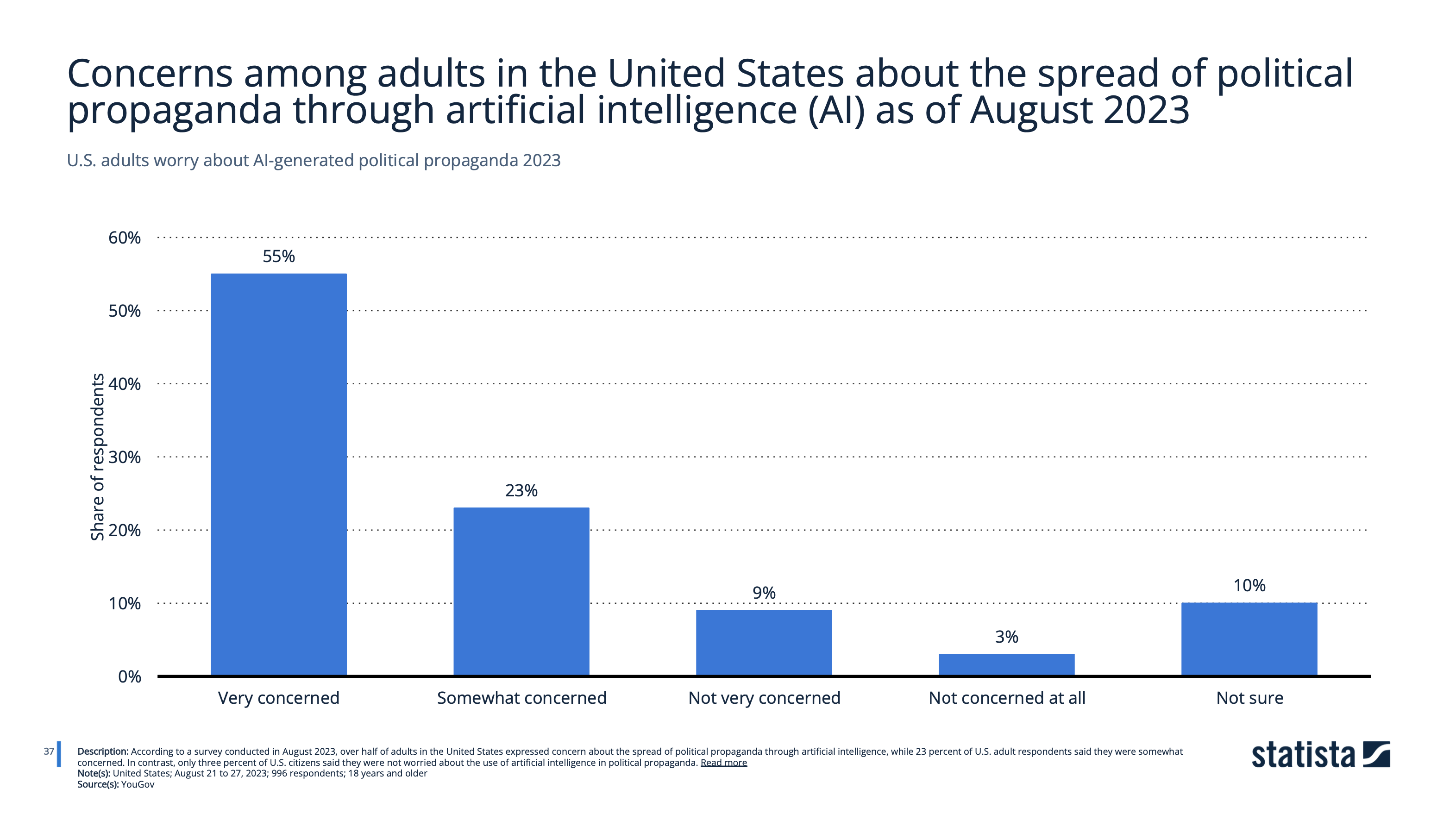
Disinformation generated AI is made with the intention to trick viewers. While some content may not have malicious intent, it can still be easily mistaken for reality. Disinformation AI can have real effects on politics, the economy, and the emotions of targeted groups. It is more important than ever to stay vigilant when analyzing media, especially news to protect yourself from false information.
Tips and Tricks
“Look for AI quirks: Odd phrasing, irrelevant tangents or sentences that don't quite fit the overall narrative are signs of AI-written text. With images and videos, changes in lighting, strange facial movements or odd blending of the background can be indicators that it was made with AI.
Consider the source: Is this a reputable source such as the Associated Press, BBC or New York Times, or is this coming from a site you never heard of?
Do your own research: If a post you see online looks too crazy to be true, then check it out first. Google what you saw in the post and see if it's real or if it's just more AI content that went viral.
Get a reality check:Take a timeout and talk with people you trust about the stuff you're seeing. It can be harmful to keep yourself in an online bubble where it's becoming harder to tell what's real and what's fake.
What continues to work best when fighting any kind of misinformation, whether it's generated by humans or AI, is to not share it” (Gonzalez, 2023).
Gonzalez, O. (2023, November 8). AI misinformation: How it works and ways to spot it. CNET. https://www.cnet.com/news/misinformation/ai-misinformation-how-it-works-and-ways-to-spot-it/
Statista. (2023). Social media and artificial intelligence. https://www-statista-com.proxy.ulib.uits.iu.edu/study/173019/social-media-and-artificial-intelligence-ai/
Take the quiz below to test out your ability to recognize generated AI photos.
Can You Recognize AI?